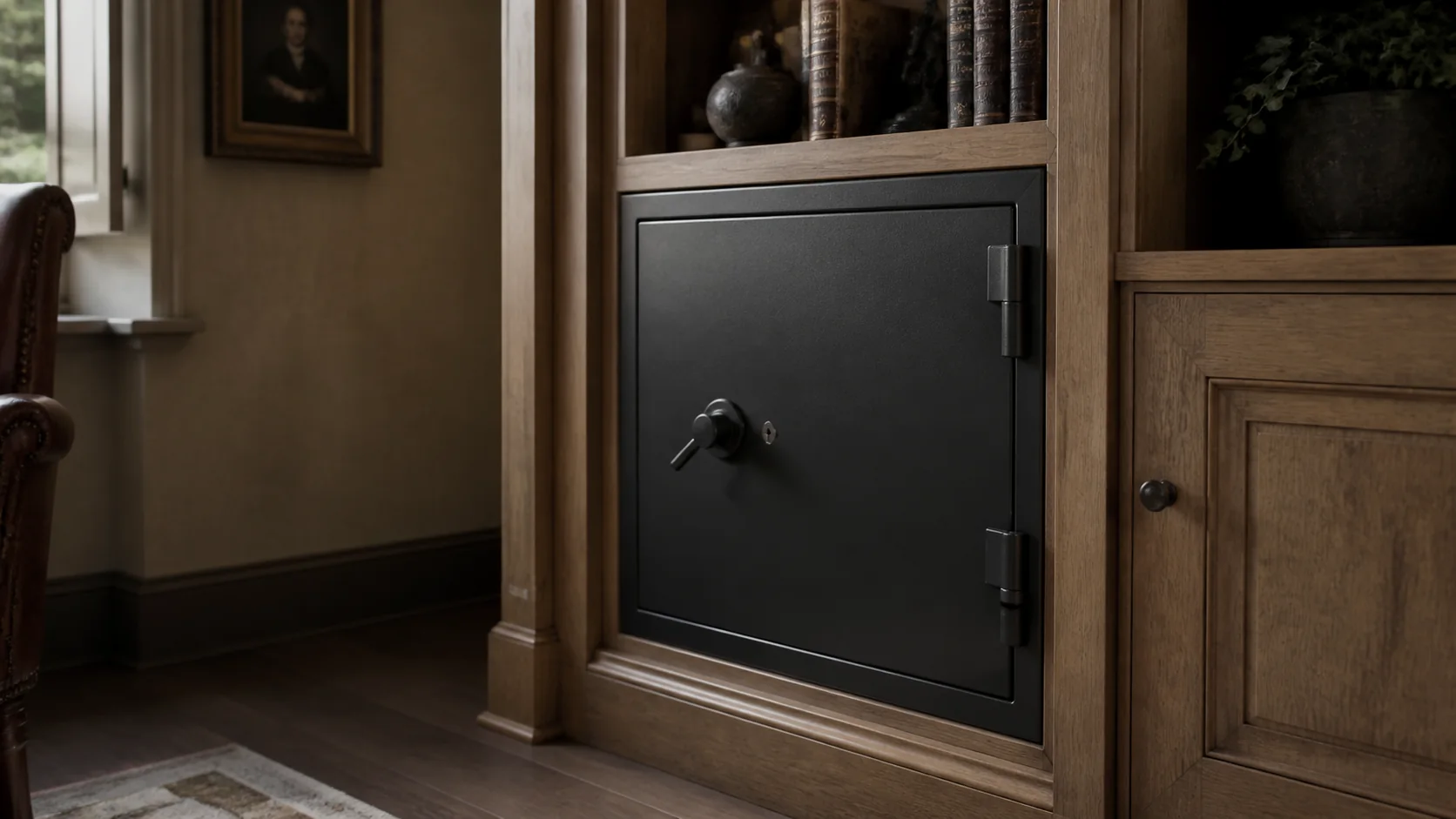
A safe
room.
A safe room does not protect things: it protects people, in the minutes that count.
When people talk about home security, they think of possessions: jewellery, art, documents. A safe room starts from a different question: what happens if someone breaks in while the family is at home? It is a room designed so that people can take shelter within seconds, lock themselves in and stay in touch with those who can help, until the emergency is over.
The term is often heard alongside “panic room”, and in everyday language the two mean the same thing. It should not be confused with a vault, which protects valuables, or with a bunker, designed for long isolation from outside events. A safe room has a precise, short task: protecting people during an intrusion.
When it is really needed
Not in every home. It makes sense when several conditions add up: an isolated villa, or one far from immediate help; a family exposed because of public profile, wealth or profession; valuables that could attract an attack while the house is occupied; periods when only some members of the family are at home, for example in the evening or during business trips.
It makes less sense when an intrusion can be stopped earlier: with a good perimeter, fast alarm verification and suitable doors and windows, there is already time to react. That is why a safe room is never the first step. It is the last link in a system that first tries to keep the intruder out.
Where it goes
The rule is simple: it must be reachable within seconds from where the family is most vulnerable, which means at night. That is why it is most often placed near the bedrooms. A perfect room on the wrong floor will not be reached in time.
Often a safe room is not a new room but an existing space that changes function only when needed: a walk-in wardrobe, a study, an inner bathroom. From outside it looks like any other door. This discretion is part of the protection: the fewer people who know it exists, the better.
What makes it safe
Door and walls. The door must resist an attack with tools for as long as it takes help to arrive, and it is useless if the walls around it are weaker. Door, frame, walls and slab are designed together, with a level of resistance chosen for the real risk.
Communications. Whoever is inside must be able to call for help even if the house line has been cut: this needs an independent connection with its own power supply. Where there is a security patrol service, the call can go straight to people who already know what to do.
A view of the house. From inside, it must be possible to see the camera images. Knowing where the intruder is and when they have left helps decide when to come out, and makes it possible to give precise directions to those responding.
Air and light. Adequate ventilation, lighting that works without mains power and the essentials to stay inside calmly for as long as needed: water, a first-aid kit, any medicines the family needs.
Opening. The door closes in one movement and opens only from inside, or by someone authorised. The opposite case must be considered too: that nobody, children included, gets locked in by mistake.
A room that works only if you know how to use it
The best-built safe room is useless if, in a moment of fear, nobody remembers how to close it or whom to call. That is why the design also covers the rules: who goes there, in what order, who takes care of the children, who makes the call and what they say. A few instructions, rehearsed together now and then, are worth more than any technology.
If staff work in the house, it must be decided what they need to know. Often it is enough for them to know the procedure without knowing the room.
New house or existing house
In a house still being designed, the safe room is drawn together with the building: structure, cable routes, ventilation and door are integrated without anything showing. It is the simplest and most effective case, and I write about it in Security before construction.
In an existing house it can still be done, by choosing the most suitable space and reinforcing it. The work is more invasive, but often less than people fear, especially if it is combined with a renovation.
How I assess it
I start from the same four readings I use for the whole house: access points, perimeter, habits and what is worth protecting. They are described in How to read the risk of a villa. I suggest a safe room only if this analysis shows that the family may be at home during an intrusion without time for outside help, and I size it on that risk. Design and construction are carried out with NetCom Security Group.
The first consultation is free and confidential: how it works.
Frequently asked questions
Are a safe room and a panic room the same thing?
In everyday language, yes: both terms mean a room where the family takes shelter during an intrusion. A vault, which protects valuables, and a bunker, designed for long isolation, are different things.
Can a safe room be created in an existing house?
Yes. The most suitable space, usually near the bedrooms, is chosen and reinforced. A renovation is the best moment to do it.
Can it be recognised from outside?
It should not be. It is often a walk-in wardrobe, a study or an inner bathroom that looks like any other room from outside.
How long do you stay inside?
As long as it takes for help to arrive and for the intruder to leave. It is not a bunker: it is designed for a short emergency.
Are a safety room and a safe room the same thing?
Yes. “Safety room” is a common way of saying safe room in Italy: a reinforced room in the home where you lock yourself in and call for help during an intrusion.